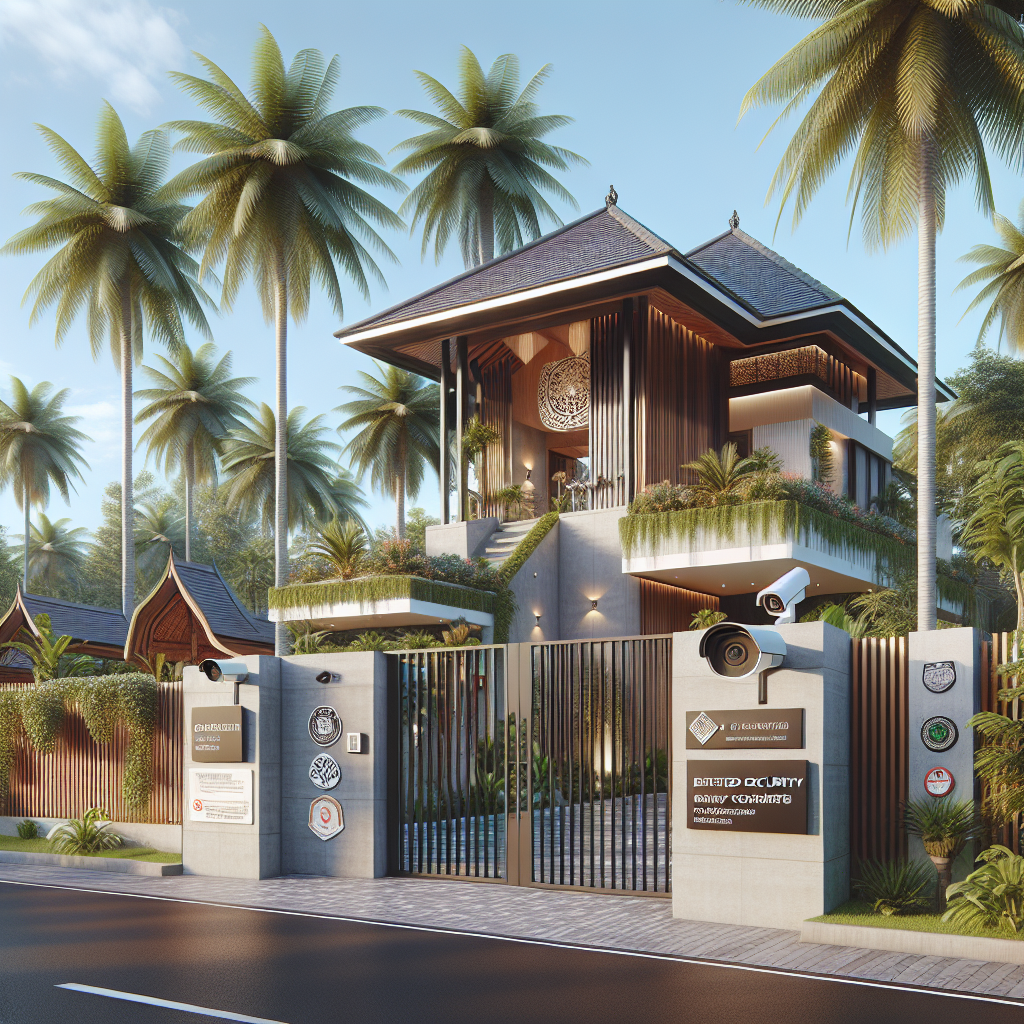
How Foreigners Can Profitably Invest in Bali Real Estate: A Step-by-Step Guide to Hak Pakai and Hak Pakai Apartemen

How Foreigners Can Invest in Bali Real Estate: A Guide to Hak Pakai and Leasehold Apartments
Since 2023, the legal framework for foreigners owning property in Bali has significantly simplified. Thanks to land law reforms, foreign nationals can now obtain the Hak Pakai (Right of Use) title without the need for a Stay Permit/KITAS. This opens up a transparent and legal pathway for investing in houses, villas, and apartments across Indonesia.
This article offers a comprehensive guide: what the Hak Pakai entails, requirements for foreign investors, the registration process, and how buying into multi-unit apartment developments differs. We’ll also address key risks and limitations, tax implications, and practical advice for a secure purchase.
Contents
- What is Hak Pakai: Legal Overview
- Key Requirements and Restrictions
- Step-by-Step Acquisition Process
- Apartments, Strata Title, and Risks
- Taxes and Financial Obligations
- Investor Advantages with Hak Pakai
- Conclusion
What is Hak Pakai: Legal Overview
Hak Pakai (Indonesian for "Right of Use") is one of Indonesia’s land titles that allows a foreign individual to legally use and occupy real estate. While not full ownership (unlike Hak Milik), it is recognized by the state, registered, and protected under Indonesian law.
Key characteristics:
- Established under the Basic Agrarian Law (UU No. 5 Tahun 1960).
- Available to foreign individuals, local entities, and institutions.
- Valid for 30 years, extendable by 20 and another 30 years — up to 80 years in total.
- As of 2023, can be granted using only a foreign passport, without requiring a Stay Permit/KITAS. (Source: Peraturan Menteri ATR/BPN No. 18 Tahun 2021 and its update)
- Can be mortgaged and transferred through inheritance.
This title is granted on properties built on land with Hak Milik (Freehold) rights, temporarily converted by the government to a leasehold arrangement for foreign usage.
Key Requirements and Restrictions
Although the process is more open, Hak Pakai ownership comes with important conditions set by law:
- Physical presence in Indonesia: The property must be actively used to maintain land residency. Tax residency typically requires 183 days per year, though land law doesn’t specify this directly — it is mainly relevant for permit renewals and tax classification.
- Land size restrictions: Minimum and maximum land sizes are set by regional laws. In Bali, for instance, the minimum size is 50 m² for apartments and 100 m² for standalone homes.
- Minimum value threshold: Under BKPM regulations (Investment Coordinating Board), property acquired by a foreigner in Bali must be valued at no less than IDR 5 billion (~USD 320,000) for a home or villa.
- Land use designation: The property must be in a residential zone (zona perumahan). Agricultural or industrial land cannot be purchased.
- Resale terms: If sold to an Indonesian citizen, the land title automatically reverts to Hak Milik (Freehold), enhancing liquidity for local buyers.
Step-by-Step Acquisition Process
1. Selecting a Suitable Property
The property must have a Hak Milik title, be located in a residential zone, and meet the minimum price requirement for foreign buyers. Ensure all documents from the seller or developer are in order. Not all properties are eligible for conversion to Hak Pakai.
2. Preliminary Agreement (CSPA – Conditional Sale and Purchase Agreement)
This agreement outlines key terms between buyer and seller:
- Purchase price
- Registration timeline
- Parties’ obligations
- Deposit amount (typically 10–20%)
3. Notary Registration (PPAT)
You will need a licensed Indonesian land notary (Pejabat Pembuat Akta Tanah) to draft and file the legal documents with the National Land Registry (BPN). Transactions are not legally recognized without PPAT involvement.
4. Issuance of the Title
Upon successful processing, the buyer receives a Sertifikat Hak Pakai — an official certificate detailing ownership rights, property location, validity period, and titleholder information. It can also be used for mortgage or inheritance purposes.
Apartments, Strata Title, and Risks
Foreigners may also purchase units in residential apartment buildings, given certain conditions. Under Indonesia’s law on multi-story ownership (Satuan Rumah Susun), the right involves a Strata Title with a Hak Pakai interest in both the apartment unit and shared common areas.
Key considerations when buying an apartment:
- The development must be built on land held under Hak Milik by the developer.
- The building must be legally certified for Strata Title ownership (more common in Jakarta and Bali).
- The property must be designated entirely for residential use.
- The developer must issue a Strata Certificate granting a Hak Pakai share in the project.
Potential risks:
- Buying during pre-construction without a registered Strata Title poses risks of delays, incomplete delivery, or loss of funds — similar to pre-sale issues in other countries.
- Some developers miszone the project or sell units to foreigners without proper land permits.
- Rental activity requires a tourism accommodation license (Pondok Wisata) or hotel license.
Taxes and Financial Obligations
Real estate transactions in Indonesia involve taxes and official fees that should be factored into your investment planning.
Key taxes:
- Buyer: Acquisition tax — 5% of assessed value (BPHTB).
- Seller: Capital gains tax — 2.5% of the transaction amount.
- Annual Property Tax (PBB): Calculated based on assessed (taxable) value rather than market price.
If you rent out the property, income taxes also apply. If you're not a tax resident, withholding taxes can reach up to 20%, unless a Double Tax Treaty (DTT) exists — Russia has such a treaty with Indonesia.
Investor Advantages with Hak Pakai
- Legally registered ownership and residency rights, without the need to set up a local company or use a nominee owner.
- Access to mortgages from Indonesian banks serving expats (e.g., BCA, CIMB Niaga).
- Flexible resale options: Property may be sold to another foreigner or to an Indonesian citizen — in the latter case, the title reverts to Hak Milik, increasing marketability.
- Streamlined process post-2023 reforms: No Stay Permit/KITAS required, faster registration, and improved market transparency.
Conclusion
Real estate in Bali is a legitimate, secure, and high-potential investment for foreign nationals when pursued via the legally recognized Hak Pakai title.
This framework allows you to own property officially in one of Asia’s most dynamic resort markets. By following legal protocols, selecting a compliant property, conducting due diligence, and completing all registrations, you ensure long-term safety, lifestyle comfort, and solid investment performance.
Keep in mind: Hak Pakai is not freehold (Hak Milik), but it provides structured ownership with full legal backing. Always work with certified legal advisors and notaries (PPAT), investigate land zoning, and factor in tax implications and usage rights from the outset.
Bali continues to be one of the top real estate destinations in Asia — with the right strategy, it’s possible to invest in a villa, apartment, or condo legally and profitably. ---
Additional SEO Keywords:
buying property in Bali as a foreigner, investing in Indonesian real estate, expat ownership in Bali, Hak Pakai apartments, Strata Title Indonesia